Herbal extracts sit between traditional practice and modern process engineering. Consumers may see a golden oil, dark tincture, or fine powder. Manufacturers must see solvent polarity, temperature, pressure, time, yield, and contamination risk. The question “what extraction methods are used for herbal extracts” therefore requires more than a simple list.
Industry evidence shows why this topic matters. The American Botanical Council’s HerbalGram 2024 market report estimated U.S. herbal supplement sales at approximately $12.6 billion in 2023. Meanwhile, the World Health Organization’s Global Traditional Medicine Strategy 2025–2034 emphasizes quality, safety, evidence, and responsible integration. These reports do not make every extract reliable. They show the need for disciplined choices.
Dr. Farid Chemat, a leading researcher in sustainable extraction, wrote, “Green extraction is based on the discovery and design of extraction processes which will reduce energy consumption, allow use of alternative solvents, and ensure a safe and high quality extract.” His principle guides this article’s seven methods, including maceration, percolation, infusion, decoction, steam distillation, supercritical carbon dioxide extraction, and ultrasound-assisted extraction.
Each method leaves a different fingerprint. A warm decoction may suit roots, while steam distillation captures volatile aromatic compounds. Ultrasound can shorten processing time, but scale-up may expose equipment and consistency problems. Supercritical carbon dioxide offers a clean solvent profile, though its cost is significant. No method wins every time. A polished yield figure can still hide degraded compounds, residual solvents, or weak identity testing. This guide compares practical strengths, limitations, and quality controls, while admitting one uncomfortable truth: “natural” does not automatically mean safe, consistent, or scientifically proven.
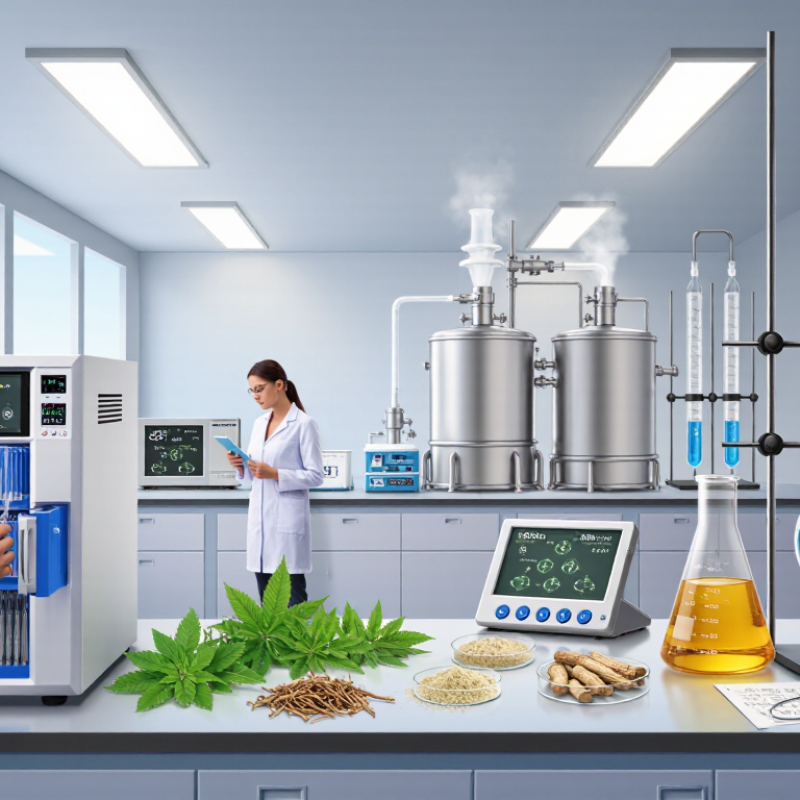
7 Best Extraction Methods for Herbal Extracts?
Good herbal extracts begin with prepared materials, not expensive equipment. Use correctly identified, clean plant parts, and remove soil, insects, and damaged tissue. Fresh leaves often suit infusion, while firm roots and bark need decoction. Dry materials should be brittle, not damp. I once underestimated moisture in sliced roots, and the extract turned cloudy. That mistake showed me why weighing and recording matter.
Seven practical methods include infusion, decoction, maceration, percolation, tincturing, glycerite extraction, and steam distillation. Water works well for many teas and decoctions. Food-grade ethanol can draw different compounds from dried herbs. Glycerin offers a gentler, alcohol-free option. Choose the solvent according to the plant material and intended use. Never assume one solvent extracts everything. Use clean glassware and avoid reactive containers. Keep the process within suitable local safety and legal requirements.
Tips: Measure plant-to-solvent ratios carefully. Label the herb, date, solvent, and batch size. Control temperature with a thermometer, especially during decoction or steam distillation. Gentle heat is usually safer than boiling for delicate leaves. Short extraction times may produce weak results, while excessive time can bring out bitter compounds. Filter through clean cloth or paper, then store the extract in a sealed, light-protected container. Small trials are wiser. Compare color, aroma, clarity, and yield, but remember that appearance alone cannot prove quality.
| Extraction Method | Recommended Herbal Material Preparation | Common Solvent or Medium | Typical Conditions | Best Suited For | Main Advantages | Important Limitations |
|---|---|---|---|---|---|---|
| Infusion | Use clean, dried leaves, flowers, or soft aerial parts. Cut or lightly crush the material to increase surface area without producing excessive fine powder. | Hot water, usually without boiling the plant material directly. | Add hot water at approximately 80–100°C and steep for about 5–20 minutes. Filter while warm and use promptly or refrigerate for short-term storage. | Aromatic leaves, delicate flowers, and herbs containing water-soluble constituents. | Simple, inexpensive, low-solvent method that preserves many water-soluble compounds and is suitable for household-scale preparation. | Limited extraction of poorly water-soluble compounds. Heat-sensitive constituents may degrade, and the liquid has a short shelf life unless preserved. |
| Decoction | Coarsely cut or crushed dried roots, bark, seeds, rhizomes, or other dense plant parts. Remove soil and foreign matter before processing. | Water. | Simmer gently, commonly around 90–100°C, for approximately 15–45 minutes. Cool and filter after extraction. | Hard, fibrous materials that require prolonged contact with hot water. | Improves water penetration into dense tissues and is practical for extracting many polar constituents. | Prolonged heat can reduce volatile or heat-sensitive components. The extract is susceptible to microbial spoilage and may contain relatively low concentrations of nonpolar compounds. |
| Maceration | Dry the herb to a stable moisture level, then mill or coarsely powder it. Avoid excessive heat during grinding. | Water, ethanol–water mixtures, glycerol–water mixtures, or other food- or laboratory-compatible solvents selected for the target compounds. | Soak at room temperature, commonly 15–25°C, for several hours to several days with periodic mixing. Filter and press the plant residue before clarification. | Heat-sensitive compounds and small-scale preparations where simple equipment is preferred. | Gentle conditions reduce thermal stress and allow flexible solvent selection. | Slow and sometimes less efficient than assisted methods. Solvent penetration, particle size, agitation, and plant moisture strongly affect the result. |
| Percolation | Dry and moderately powder the plant material, then moisten it with solvent before packing it evenly into a percolator. Prevent channeling and over-compression. | Water, ethanol, or hydroethanolic mixtures, depending on the desired constituents and intended use. | Allow the moistened material to equilibrate, then pass solvent slowly through the packed bed at a controlled rate. Collect and clarify the percolate. | Continuous production of tinctures and extracts from relatively uniform, porous herbal powders. | More efficient solvent contact than static soaking and can produce a relatively concentrated extract without prolonged heating. | Requires careful control of particle size, packing density, flow rate, and solvent volume. Fine powders may block flow or form channels. |
| Soxhlet Extraction | Thoroughly dry and finely to moderately grind the material. Place it in a suitable porous extraction thimble and avoid excessive compaction. | Organic solvents such as ethanol, ethyl acetate, or hexane may be selected according to compound polarity and laboratory safety requirements. | Continuous hot-solvent cycling for several hours. The solvent is heated to reflux, condensed, and repeatedly passed through the plant material. | Exhaustive laboratory extraction of relatively stable, nonvolatile compounds from dry materials. | Repeated washing with fresh condensed solvent can provide efficient extraction using a comparatively small solvent volume. | Heat exposure may degrade thermolabile compounds. The method consumes energy and may involve flammable or toxic solvents requiring appropriate ventilation and recovery equipment. |
| Ultrasound-Assisted Extraction | Dry and finely or moderately mill the herb. Use a particle size that improves contact while still allowing effective stirring and filtration. | Water, ethanol–water mixtures, or another validated solvent compatible with the target compounds. | Sonicate the solvent–plant mixture, commonly at approximately 20–50 kHz, for about 10–60 minutes. Control temperature because ultrasound can cause localized heating. | Rapid extraction of phenolics, flavonoids, pigments, and other compounds from many plant tissues. | Often reduces extraction time and solvent use by improving cell disruption and mass transfer. | Excessive sonication can promote oxidation or degradation. Results depend on frequency, power, temperature, solvent ratio, and vessel geometry. |
| Pressurized Liquid Extraction | Dry and uniformly grind the material, then remove excessive fine particles to reduce clogging. Pack the extraction cell evenly. | Water, ethanol, hydroethanolic mixtures, or other validated solvents maintained in the liquid state under pressure. | Use elevated temperature and pressure to keep the solvent liquid; a common laboratory range is approximately 50–150°C and 5–15 MPa, with extraction performed in static or flow cycles. | Efficient analytical or pilot-scale extraction when rapid, reproducible processing is required. | Fast mass transfer, reduced solvent consumption, and good reproducibility when parameters are controlled. | Requires specialized high-pressure equipment and validated safety procedures. Higher temperatures may be unsuitable for volatile or heat-sensitive constituents. |
It helps release compounds trapped inside dense leaves, roots, or seeds. Sound waves create microscopic bubbles. Their collapse disrupts plant cells. Short cycles are safer than continuous treatment.
Use a clean glass vessel and monitor the water bath closely. Excess heat can damage delicate constituents. Moderate conditions are usually safer. I may underestimate small temperature changes.
Not always. A water-ethanol mixture may extract a broader range. Test the ratio with small batches. More solvent does not guarantee better results.
No. Cloudiness may come from fine particles, waxes, or unstable compounds. Filter it carefully before judging the extract. Appearance alone can mislead.
It separates volatile aromatic molecules from fresh or dried plant material. Steam passes through packed herbs. A condenser cools the vapor into aromatic oil and floral water.
Keep steam flow steady and avoid excessive pressure. Strong pressure can create harsh odors. It may also increase thermal degradation. Some delicate aromas may still disappear.
Maceration usually needs the least equipment. It may require several days. Yield can be moderate. Filtration and solvent choice strongly affect purity.
Record botanical identity, harvest date, moisture, particle size, temperature, time, and solvent ratio. These details expose hidden differences. Small drying changes can alter yield unexpectedly.
Define the target compounds first. Gentle infusion suits delicate leaves and flowers. Decoction suits tougher roots, but heat may cause damage. No method wins every trial.
This guide explains what extraction methods are used for herbal extracts and how each approach suits different plant materials and goals. It begins with preparing herbs properly, selecting suitable solvents, and controlling key conditions such as temperature, time, moisture, and particle size. Cold solvent techniques, including maceration and percolation, are introduced as practical options for drawing out compounds gradually while helping preserve heat-sensitive constituents.
Water-based and heated methods, including infusion, decoction, and Soxhlet extraction, are compared for their efficiency and suitability for different herbs. The guide also covers ultrasound-assisted extraction, which can improve contact between plant material and solvent, and steam distillation, which is commonly used to collect volatile aromatic compounds. Finally, the seven methods are evaluated by extraction yield, purity, cost, equipment requirements, processing time, and intended application, helping readers choose a balanced and effective approach for preparing herbal extracts.

 Rubrum Biologics