China’s top 10 standardized herbal extracts deserve closer attention because consistency begins with measurable details. In herbal manufacturing, the same plant can vary by species, soil, harvest season, drying method, and storage conditions. Standardization helps control these differences through defined marker compounds, botanical identification, and batch testing. That answers the question, why are standardized herbal extracts important?
Dr. Roy Upton, founder of the American Herbal Pharmacopoeia, has emphasized, “You cannot have good herbal medicine without good-quality herbs.” His point remains practical. A reliable extract should show its plant identity, extraction ratio, marker profile, and contaminant testing. These records create a clearer path from Chinese farms to finished products. They also help buyers compare suppliers without relying only on attractive labels or low prices.
The leading extracts are not automatically the best. Their value depends on traceability, validated analytical methods, and honest documentation. Tests may examine heavy metals, pesticides, microbes, residual solvents, and adulteration. A certificate of analysis is useful, but it is not magic. Laboratories can differ, and marker compounds do not always represent every active constituent.
That limitation deserves attention. Standardization improves predictability, yet it cannot remove all botanical complexity. Responsible manufacturers should combine laboratory data with correct species selection, controlled processing, stability checks, and qualified expert review. This article examines ten important Chinese standardized herbal extracts through that practical lens. It focuses on evidence, quality signals, and purchasing risks, rather than making broad health promises.
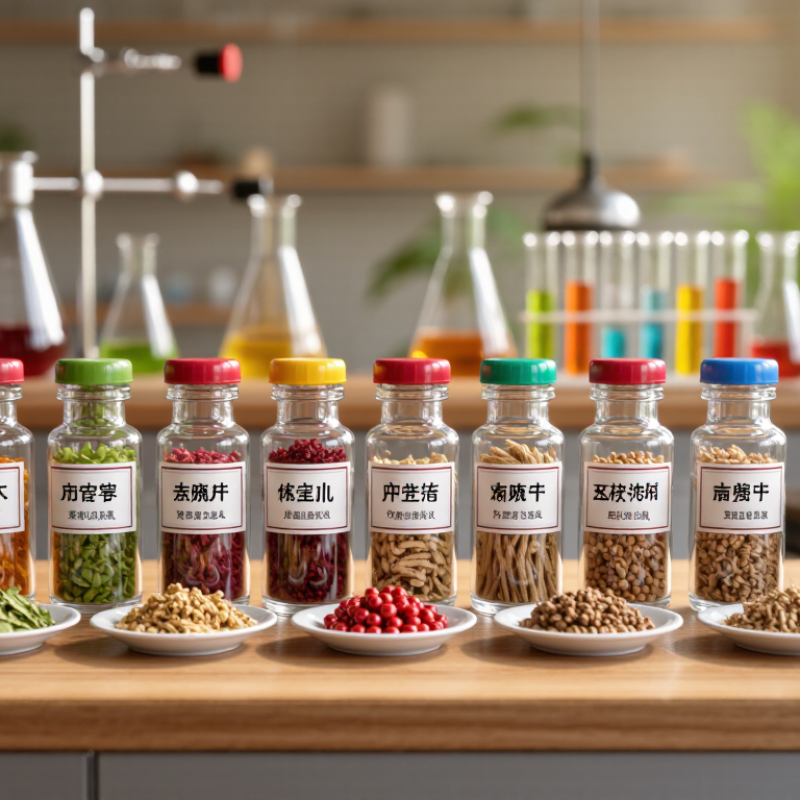
What Are Standardized Herbal Extracts?
Standardized herbal extracts are concentrated plant preparations made to contain a defined level of selected compounds. These compounds are called marker constituents. For example, a specification may require each batch to contain 20% of a named botanical compound. The percentage is checked through validated laboratory testing, often using HPLC or similar analytical methods. That sounds simple. It is not.
Standardization helps manufacturers compare batches, because weather, soil, harvest timing, and drying conditions can change a plant’s chemistry. A reliable process also records the plant species, plant part, extraction solvent, extract ratio, and testing results. Trained quality teams should check identity, microbial limits, heavy metals, pesticides, and residual solvents. A certificate of analysis can support traceability, but it deserves careful review.
Standardized does not mean completely identical. An extract may control one marker while other natural compounds vary. The marker may also indicate consistency without proving the strongest biological effect. This is where careful interpretation matters. A polished label can still hide weak sourcing or incomplete testing. I would look for botanical identification, batch numbers, testing dates, and transparent specifications before judging quality. The extract ratio alone is not enough. A 10:1 ratio does not automatically mean ten times greater potency.
China’s Top 10 Standardized Herbal Extracts: Why Are They Important?
Standardized herbal extracts are adjusted to contain a consistent level of selected marker compounds or active constituents. This improves batch-to-batch consistency, supports quality control, makes research results more comparable, and helps manufacturers define reproducible formulations. The values shown are commonly cited representative specification targets; actual limits may vary by pharmacopeia, extraction method, plant part, and product formulation.
How China Produces and Regulates Standardized Extracts
China’s standardized herbal extracts are built around repeatable production, not simply traditional names. The process begins with authenticated plant material, recorded origin, harvest time, and drying conditions. Manufacturers then control extraction temperature, solvent strength, concentration, and spray-drying parameters. Each batch is tested for marker compounds, microbial limits, pesticides, heavy metals, and residual solvents.
China’s Pharmacopoeia Commission sets identification and quality requirements for many medicinal materials and preparations. The National Medical Products Administration also expects documented manufacturing controls and traceable batch records. High-performance liquid chromatography and thin-layer chromatography are commonly used to compare chemical profiles. According to the WHO Global Report on Traditional and Complementary Medicine 2019, 170 countries reported using traditional medicine. This international use increases pressure for clearer specifications and reliable testing. Yet standardization has limits. A marker compound can confirm consistency, but it cannot represent every active component in a complex plant.
Tips: Ask for the botanical Latin name, plant part, extraction ratio, solvent, marker range, and recent test results. Check whether the report identifies the laboratory and batch number. Do not rely on “natural” wording alone. It is reassuring, but incomplete. China’s production system is increasingly structured, although supplier documentation can still vary. Independent verification remains sensible, especially when color, odor, or powder texture changes between batches. Industry market reports often predict rapid growth, but forecasts are not the same as confirmed clinical performance.
China’s Top 10 Standardized Herbal Extracts
China’s Top 10 Standardized Herbal Extracts often include ginseng, green tea, turmeric, milk thistle, ginger, rhodiola, ashwagandha, saw palmetto, grape seed, and bilberry. These extracts are selected for defined marker compounds, not simply for their plant names. Standardization helps manufacturers compare batches and plan consistent formulations. However, “standardized” does not always mean identical quality. Extraction methods, plant origin, harvest time, and storage can still change the final profile.
In practical sourcing, buyers should review the botanical name, plant part, extraction ratio, marker percentage, and test method. A reliable supplier should provide batch records, certificates of analysis, and testing for heavy metals, pesticides, microbes, and residual solvents. Ginseng may be measured by ginsenosides, while green tea is often assessed through catechin content. Turmeric commonly uses curcuminoids as markers. These details matter. A polished specification sheet can still hide weak traceability.
Tips: Ask for recent batch data, not only a template certificate. Check whether the testing laboratory is independent and qualified. Confirm that local regulations permit the intended use and claims. Remember that a “top 10” list is not universal; market demand and evidence change. I would also compare two batches before committing, because one sample rarely tells the whole story.
China Top 10 Standardized Herbal Extracts Why Important? - China’s Top 10 Standardized Herbal Extracts
| No. |
Herbal Extract |
Botanical Source |
Typical Standardization Marker |
Representative Specification |
Common Traditional Application |
Why Standardization Matters |
| 1 |
Ginkgo Leaf Extract |
Ginkgo biloba L. |
Flavone glycosides and terpene lactones |
24% flavone glycosides; 6% terpene lactones |
Traditional support for circulation and cognitive health |
Controls the relative levels of the major flavonoid and terpene fractions and improves batch comparability. |
| 2 |
Ginseng Extract |
Panax ginseng C.A. Meyer |
Total ginsenosides |
Commonly 10%–20% total ginsenosides, depending on the extract type |
Traditional tonic and fatigue-support applications |
Ginsenoside content varies substantially with age, plant part, extraction method, and processing. |
| 3 |
Green Tea Extract |
Camellia sinensis (L.) Kuntze |
Total catechins and epigallocatechin gallate (EGCG) |
Often 40%–80% total catechins; EGCG commonly specified separately |
Traditional beverage and antioxidant-support use |
Defines catechin potency while helping manage caffeine and oxidation-related variation. |
| 4 |
Turmeric Extract |
Curcuma longa L. |
Total curcuminoids |
Common concentrated extracts specify approximately 95% curcuminoids |
Traditional digestive and joint-comfort applications |
Provides a consistent ratio of curcumin, demethoxycurcumin, and bisdemethoxycurcumin. |
| 5 |
Milk Thistle Extract |
Silybum marianum (L.) Gaertn. |
Silymarin |
Frequently standardized to about 70%–80% silymarin |
Traditional liver-support applications |
Reduces variability in the complex flavonolignan fraction, including silybin-related compounds. |
| 6 |
Rhodiola Extract |
Rhodiola rosea L. |
Rosavins and salidroside |
A commonly cited profile is 3% rosavins and 1% salidroside |
Traditional adaptogenic and fatigue-support applications |
Confirms the characteristic rosavin-to-salidroside profile and helps identify substitute materials. |
| 7 |
Astragalus Root Extract |
Astragalus membranaceus (Fisch.) Bunge |
Astragaloside IV and polysaccharides |
Specifications vary; astragaloside IV is often listed separately at low percentage levels |
Traditional immune and vitality-support applications |
Separately measures saponins and polysaccharides because these fractions can change with extraction conditions. |
| 8 |
Schisandra Berry Extract |
Schisandra chinensis (Turcz.) Baill. |
Schisandrins, especially schisandrin B |
Marker levels vary by fruit, solvent, and extract ratio; individual lignans are commonly quantified |
Traditional liver, stamina, and stress-support applications |
Lignan testing helps distinguish fruit maturity, extraction efficiency, and raw-material quality. |
| 9 |
Licorice Root Extract |
Glycyrrhiza uralensis Fisch. ex DC. and related species |
Glycyrrhizic acid |
Common extracts are standardized across a broad range, often approximately 10%–20% |
Traditional throat, digestive, and formula-balancing applications |
Controls sweetness and active saponin content while supporting safety-related dose assessment. |
| 10 |
Coptis Rhizome Extract |
Coptis chinensis Franch. |
Total isoquinoline alkaloids, particularly berberine |
Berberine content is commonly quantified; exact limits depend on the monograph and extract type |
Traditional digestive and microbial-balance applications |
Alkaloid testing confirms potency and helps control the naturally variable berberine fraction. |
Note: “Top 10” is presented as a practical market-oriented selection rather than an official ranking. Representative specifications are commonly used industry ranges and may differ by pharmacopoeial monograph, plant part, extraction solvent, extract ratio, and quality standard. Traditional applications do not constitute medical claims.
Why Standardization Matters for Quality and Safety
China’s top 10 standardized herbal extracts deserve attention because consistency supports safer, more reliable use. The WHO Global Report on Traditional and Complementary Medicine 2019 recorded traditional medicine use in 170 of 194 Member States. That scale makes quality control more than a technical detail.
Standardization begins with botanical identity, extraction conditions, and measurable marker compounds. A qualified laboratory checks moisture, microbial limits, heavy metals, pesticides, and unwanted adulterants. The European Medicines Agency’s quality guidance also stresses authentication, specification setting, and batch-to-batch control. A practical example is simple: two brown powders may look identical, yet their active profiles can differ sharply. One may dissolve quickly. Another may leave sediment and show weak marker levels.
Standardization is not a magic seal. Marker compounds may not represent the whole biological activity. This is where the industry still needs humility. The United States Pharmacopeia’s botanical quality standards emphasize identity, strength, quality, and purity, but testing cannot repair poor farming records. Reliable suppliers should retain voucher specimens, production records, and independent test results. They should also investigate deviations instead of hiding them. A stronger system connects the field, extraction tank, sealed container, and final certificate. That chain helps professionals compare evidence, manage risk, and make better purchasing decisions.
How to Evaluate and Select Chinese Herbal Extracts
China Top 10 Standardized Herbal Extracts: Why Important?
How to Evaluate and Select Chinese Herbal Extracts
Selecting Chinese herbal extracts requires more than checking the botanical name. WHO reports that 170 of its 194 Member States use traditional medicine. This demand increases the need for consistent identity, safety, and traceability.
Start with authentication. Ask for the Latin name, plant part, harvest location, extraction solvent, and batch number. A clear certificate of analysis should show marker compounds and testing methods. For example, a root extract should not be judged only by its brown color or strong smell. Those details can vary naturally.
Look deeper.
Test results should cover heavy metals, pesticides, microbial limits, and residual solvents. The WHO quality-control guidelines for herbal materials recommend identity, purity, and contaminant testing. Independent laboratory verification adds useful confidence, especially when the supplier tests only its own samples.
Standardization also needs practical context. A stated 10% marker compound does not prove the whole extract performs consistently. It may reflect one chemical fraction, not the complete plant profile. Request stability data, sampling procedures, and storage conditions. Check whether the specification matches your intended dosage form.
Grand View Research estimated the global botanical extracts market at about 3.86 billion US dollars in 2023. That growth attracts capable producers, but also weak documentation. I would not select a “top” extract from a ranking alone. Compare three recent batches, inspect original records, and question unusually perfect results. Suppliers may dislike that process. Reliable quality should withstand it.
FAQS
It is a concentrated plant preparation with a defined level of selected marker compounds. The level is checked through laboratory testing. Standardized does not mean identical.
Weather, soil, harvest timing, and drying can change plant chemistry. Standardization helps manufacturers compare different batches. It improves consistency, but it cannot control every natural compound.
Request the Latin plant name, plant part, harvest location, and extraction solvent. The records should also include the extract ratio, batch number, and testing date. Missing details deserve questions.
It should list marker levels, test methods, and batch information. It should also report microbial limits, heavy metals, pesticides, and residual solvents. A certificate is useful, not magical.
No. A 10:1 ratio does not automatically mean ten times greater potency. The ratio describes starting plant material compared with final extract weight. It does not prove stronger biological effects.
Compare results from three recent batches. Check whether independent laboratories confirmed the supplier’s testing. Review sampling procedures, stability data, and storage conditions. Perfect results may still need questioning.
No. A root extract may look brown or smell strong naturally. Those features can change between harvests. Use botanical identification and laboratory testing instead.
Not always. One marker may represent only a selected chemical fraction. Other natural compounds can vary between batches. I would avoid judging the complete extract from one percentage.
Ask about temperature, moisture protection, light exposure, and shelf-life testing. Poor storage can change an extract after testing. The label may look fine. The material may not.
Compare documentation, safety results, specifications, and recent batches. Check whether the testing matches the intended dosage form. I would hesitate to choose from rankings alone.
Conclusion
Standardized herbal extracts are concentrated plant materials processed to contain a consistent level of selected active compounds or marker substances. China has developed extensive experience in cultivating medicinal plants, refining extraction methods, and applying quality controls throughout production. Standardized extracts are commonly evaluated through identity testing, purity checks, contaminant screening, and measurement of key constituents. China’s top 10 standardized herbal extracts may represent widely used botanical categories selected for their established traditional applications, production scale, and quality-control requirements.
The key question is: why are standardized herbal extracts important? Standardization improves batch-to-batch consistency, supports safer formulation, and makes it easier for manufacturers and researchers to assess dosage, stability, and performance. However, buyers should not rely on product names alone. They should review botanical identification, extraction ratios, marker-compound specifications, testing methods, certificates of analysis, traceability, and compliance with applicable regulations. Careful supplier evaluation and transparent documentation help ensure that Chinese herbal extracts are suitable for responsible use in food, supplement, cosmetic, or other legally permitted applications.

 Rubrum Biologics