Seaweed Sourced Alginic Acid Powder Pure Vegetal Extracted Best Price for Softening Agent for Breads
Product Description
Introduction
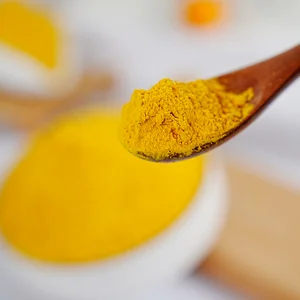
Alginic acid, named as Alginate, is a natural polysaccharide extracted from seaweed. It is made of two types of aldehyde acids with D-mannose uronic acid and L-Gu Luo uronic acid. Its appearance is light yellow powder and insoluble.
Alginic acid, also called algin or alginate, is a polysaccharide distributed widely in the cell walls of brown algae, where through binding with water it forms a viscous gum. It is also a significant component of the biofilms produced by the bacterium Pseudomonas aeruginosa, the major pathogen in cystic fibrosis, that confer it a high resistance to antibiotics and killing by macrophages. Its colour ranges from white to yellowish-brown. It is sold in filamentous, granular or powdered forms.
Alginic acid is a linear copolymer with homopolymeric blocks of (1-4)-linked β-D-mannuronate (M) and its C-5 epimer α-L-guluronate (G) residues, respectively, covalently linked together in different sequences or blocks. The monomers can appear in homopolymeric blocks of consecutive G-residues (G-blocks), consecutive M-residues (M-blocks) or alternating M and G-residues (MG-blocks).
Properties of Alginic Acid:
Appearance: White or light yellow powder
Solubility: Insoluble in water, odorless and almost tasteless
Swelling: High swell type, with swelling coefficient minimum 22
Specifications of Alginic Acid
Analysis
Specification
Characters/appearance
White to light yellow powder, almost not soluble in ethanol and organic solvent
Identification 1
producing a gelatinous precipitate, stick to the glass rod
Identification 2
producing a gelatinous precipitate
Identification 3
Dark purple
Loss on drying
≤15%
Total ash
≤ 8 %
Carboxyl content
19%--25%
Chloride
≤ 1%
Heavy Metals Sum
≤ 20.0 ppm
Microbiological quality Total Plate Count E.Coli. Salmonella
≤100 cfu/g Negative Negative
Packing & Storage
Cool and Dry
Alginate is used as an ingredient in various pharmaceutical preparations, such as Gaviscon, in which it combines with bicarbonate to inhibit reflux. Sodium alginate is used as an impression-making material in dentistry, prosthetics, lifecasting and for creating positives for small-scale casting.
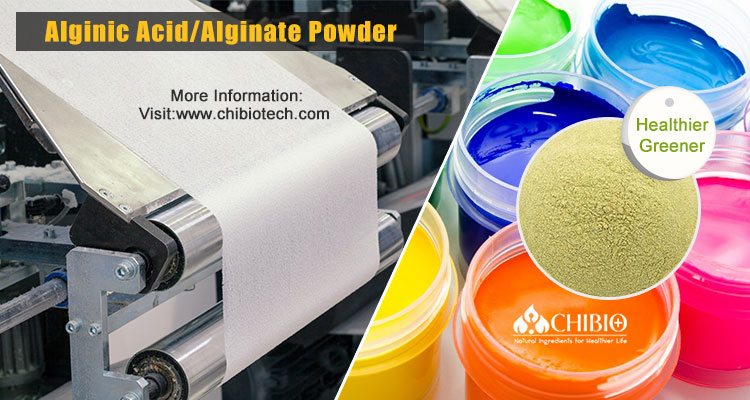
Sodium alginate is used in reactive dye printing and as a thickener for reactive dyes in textile screen-printing. Alginates do not react with these dyes and wash out easily, unlike starch-based thickeners. It is also used as a material for micro-encapsulation.
Packing & Delivery
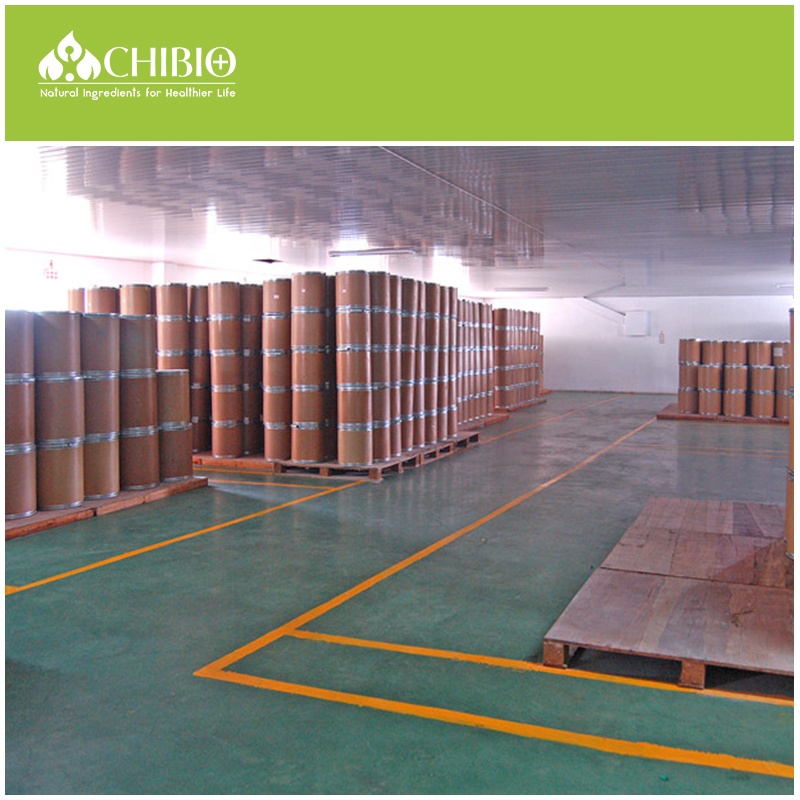
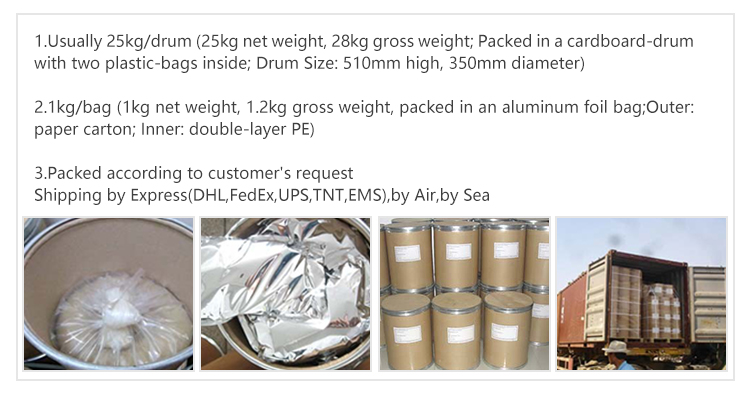
Standard Package: Usually 25kg/drum (25kg net weight, 28kg gross weight; Packed in a cardboard-drum with two plastic-bags inside; Drum Size: 510mm high, 350mm diameter)
Small Package: 1kg/bag (1kg net weight, 1.2kg gross weight, packed in an aluminum foil bag; Outer: paper carton; Inner: double-layer PE)
Customized Packaging: Packed according to customer's request
Shipping Methods: Shipping by Express (DHL, FedEx, UPS, TNT, EMS), by Air, or by Sea
Company Profile
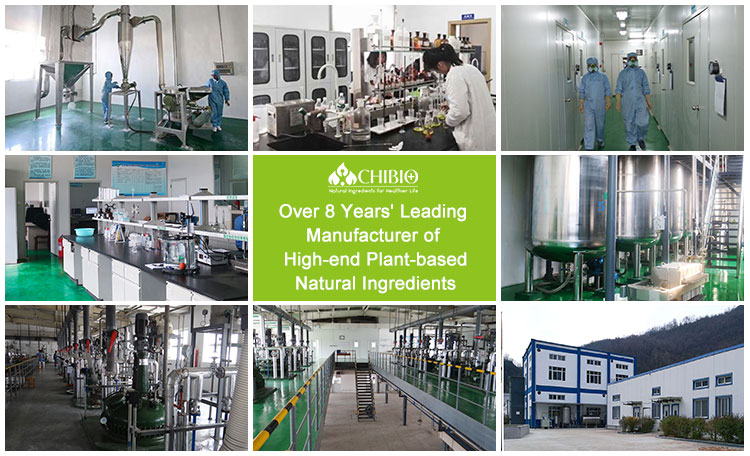
With ISO9001:2015 & KOSHER certificates, our biotechnology enterprise integrates science, industry, and trade, focusing on the R&D and production of high-end natural ingredients with commercial potentiality for over 8 years.
Since establishment, our business is engaged in the manufacturing and trading of well-characterized Non-animal Chitosan (Agaricus bisporus chitosan (button mushroom chitosan), Oyster mushroom, Aspergillus Niger Chitosan), Theacrine (Natural Kucha Tea Leaf Extract & Synthetic), cosmetics, food raw materials, and other natural ingredients.
Based on years of research & development and sales of food additives, raw materials of cosmetics, wine beverages, and health care, etc., combined with the application & scientific research results of natural product activity, we are committed to the global health industry, promoting natural ingredients with great commercial potentiality to global application fields of health care, and realizing industrialization and marketization.
Frequently Asked Questions
Q1: What is Alginic Acid and where is it sourced from?
A1: Alginic acid (also known as alginate) is a natural polysaccharide extracted from the cell walls of brown seaweed. It is an organic, vegetal-derived material widely used across food, pharmaceutical, and industrial applications.
Q2: What are the main physical properties of Alginic Acid powder?
A2: The powder is white to light yellow, odorless, and almost tasteless. It is insoluble in water and organic solvents, and behaves as a high-swell agent with a minimum swelling coefficient of 22.
Q3: How is Alginic Acid utilized in the food industry?
A3: Alginic acid serves as a high-quality softening agent for breads and baked goods. Its water-binding ability aids in stabilizing viscosity, enhancing dough texture, and extending freshness.
Q4: What are the common pharmaceutical and medical uses of Alginic Acid?
A4: In the pharmaceutical sector, it is formulated into anti-reflux preparations (like Gaviscon) to inhibit gastric acid reflux. It is also used widely in dentistry and prosthetics as an impression-making medium.
Q5: Can Alginates be used in textile printing?
A5: Yes. Sodium alginate is highly valued in reactive dye printing and screen-printing. Because alginates do not react chemically with these dyes, they wash out easily from the fabrics, outperforming starch-based thickeners.
Q6: What certifications do your biotechnology products comply with?
A6: All operations and natural ingredients are manufactured and handled in compliance with globally recognized quality standards, certified by ISO9001:2015 and KOSHER.
 Rubrum Biologics